|
|
My
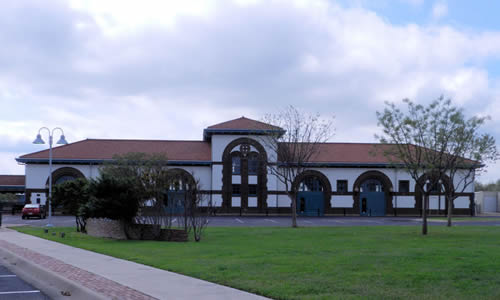
mother was a Harvey Girl, working approximately two years in the Harvey
House Restaurant in Temple.
She came from poor rural circumstances that allowed few clothes or
encouragement to improve her looks.
At 16 years of age, she left home for the first time, signed a Harvey
Girl contract and moved into a room above the restaurant alongside
the railroad track at Temple.
She and a roommate from a similar background were elated to be on
their own and away from their crowded farm homes.
For the first time in their lives, they had shiny black shoes, hose
and fine underwear, plus black skirts and starched white aprons to
wear each day. Along with a clean room, they had a bathtub and plenty
of hot water, good furniture, individual beds, a dresser with a mirror
and a steady job they could depend on. Neither could believe their
good fortune.
Under the strict rules of Fred Harvey, and with guidance from the
company managers, my mother acquired lifelong good habits in hygiene,
makeup and dress. In all the years I was around her, only once after
a serious operation did I see her without her hair combed, makeup
in place and wearing a clean dress and apron. |
Her
memories of the Harvey House mirror those recalled in the book, "The
Harvey Girl" by Lesley Poling-Kempes. The hours were long and the
work hard as they served at least four trains per 12-hour shift. Both
at work and after hours, supervision was strict and dismissal swift
if you did not obey the rules.
|
|
| A
fact most significant to the history of the West is that approximately
100,000 girls signed up to work for Fred Harvey from 1901 to about
1944. It's estimated that half or more of the women married and stayed
west to raise their families. There are probably many Panhandle
residents who are descendants of the hard-working, independent Harvey
Girls. |
|
|
 HOME
HOME