|
|
KILGORE, TEXAS
Oil Boom Town
Texas' Official "City of Stars"
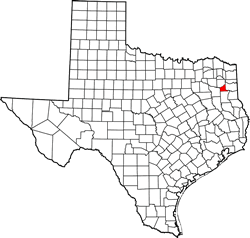
Gregg County, East
Texas
32°23'8"N 94°52'7"W (32.385534, -94.868502)
U.S. Hwy 259 and State Hwy 31, 42, & 135
12 miles SE of Longview
the county seat
33 miles
W of Marshall on Hwy
31
26 miles E of Tyler
on Hwy 31
18 miles N of Henderson on US
259
120 miles E of Dallas
off I-20
Population: 14,836 Est. (2016)
12,975 (2010) 11,301 (2000) 11,066 (1990)
|
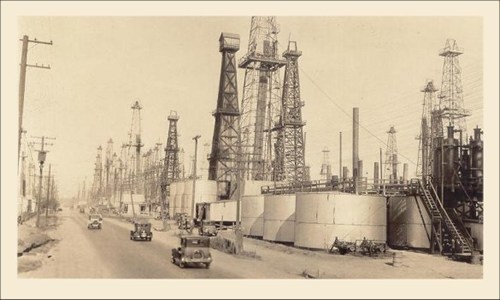
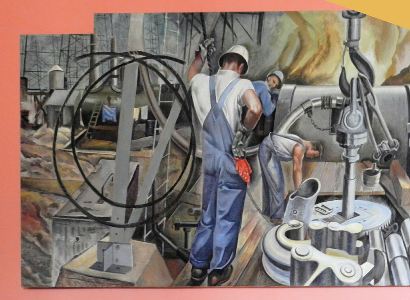
Kilgore oil
field
Vintage
postcard courtesy www.rootsweb.com/ %7Etxpstcrd/ |
Kilgore
by Bob
Bowman
In the 1940s, a drive through Kilgore was unlike any other excursion
into East Texas.
More than 1,000 wooden oil derricks -- perhaps the most visible
evidence of the East Texas
oil boom -- lined the town’s streets. During the Christmas season,
lights were hung on many of the derricks. And one plot of ground
was known as “the world’s richest acre.”
Then, the underground oil pools played out. Kilgore’s oil derricks
began to disappear and Kilgore soon looked like any other East
Texas community.
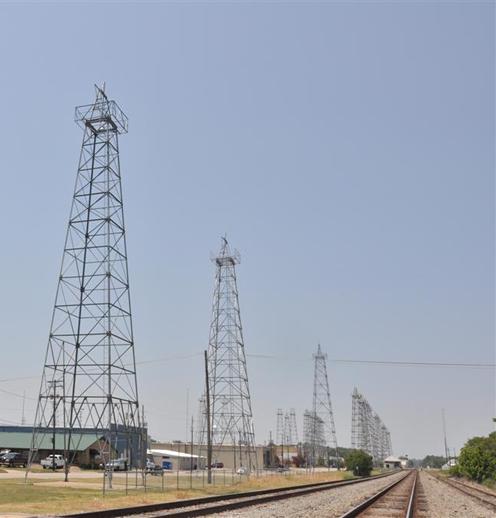
Today, steel replicas of the old derricks are back, thanks to the
work of the Kilgore Historical Preservation Society. And the Christmas
lights are back, too.
Each Christmas, Kilgore lights up its derricks and produces a sample
of what the town looked like some sixty years ago. The lights are
turned on the first Saturday after Thanksgiving and remain lit until
after January 1.
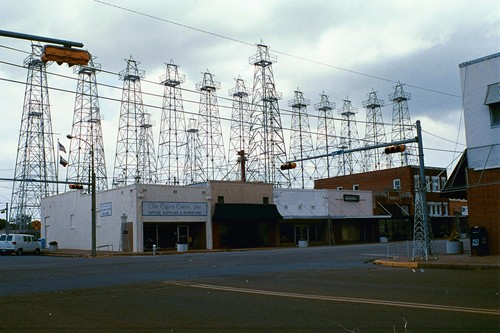
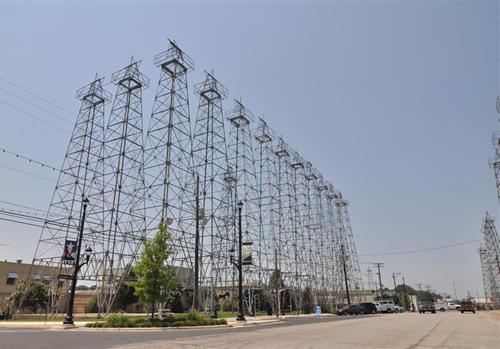
Stars top the sixty replica derricks, helping the city maintain
its title as the state's official "City of Stars." Kilgore is also
among the stops on the Holiday
Trail of Lights, which includes Marshall
and Jefferson
in East Texas and Natchitoches
and Shreveport
in Louisiana.
On Oct. 3, 1930, in a Rusk
County pasture, 70-year-old "Dad" Joiner brought in the Daisy
Bradford 3 and unknowingly tapped into the world's largest pocket
of oil.
The resulting oil boom brought thousands of producers and drillers
into East Texas, turned
the quiet little communities into raucous boom towns and made millions
for oil producers.
The boom also brought con men, prostitutes, thieves and other criminals
before Texas Rangers were assigned to clean up the area.
When the Rangers filled up the jails, they chopped a hole at each
end of an old church building, ran a chain the length of the building,
and chained and padlocked prisoners to the chain. If a prisoner
need to use a restroom, a bucket was passed down the chain.
Even though the oil patch isn’t as prosperous as it once was, oil
remains a big part of the economy of Kilgore and the city remains
a popular destination place for tourists who want to learn how oil
in Texas began.
Kilgore has carefully preserved the legacy of its boom years with
the East Texas Oil Museum near the campus of Kilgore College.
Visitors from more than 120 countries have visited the museum, which
is not only the cornerstone of oil
history in East Texas,
but one of the leading destinations for tourists in East
Texas.
This Christmas, if you remember the old wooden derricks from East
Texas’ past, come to Kilgore for a hefty dose of nostalgia from
the forties.
© Bob
Bowman
"All
Things Historical" December 19, 2005
Column
|
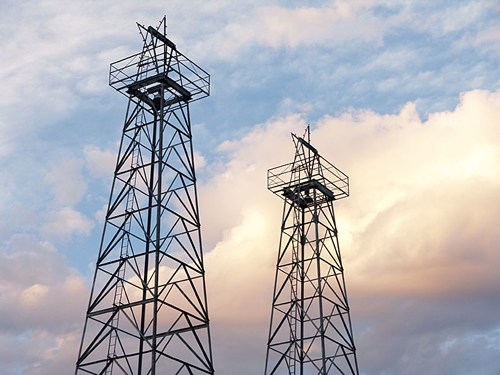 |
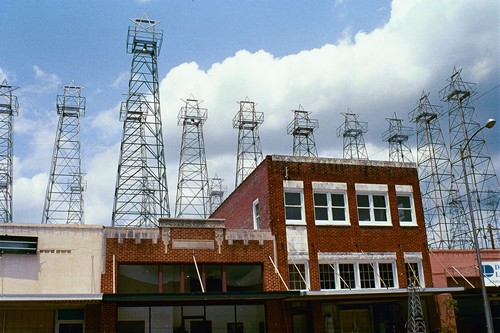
"Stars top
the sixty replica derricks"
Photo courtesy Sam
Fenstermacher, October 2006 |
Kilgore Landmarks
& Attractions
Photo Galllery
|
View of "the
world's richest acre" in downtown Kilgore.
Over 1,100 producing wells in Kilgore at the height of the boom
TE photo 5-02 |
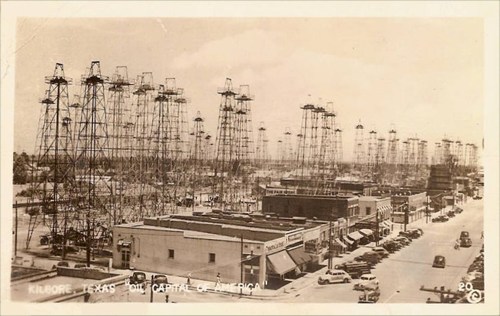
Kilgore as
"Oil Capital of America"
Postcard
courtesy www.rootsweb.com/ %7Etxpstcrd/ |
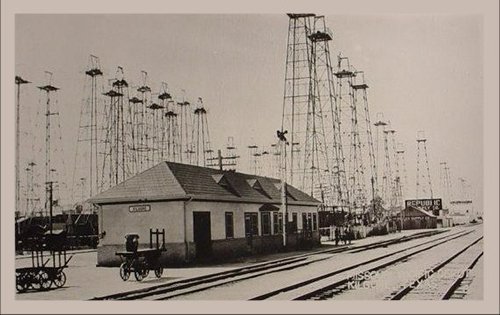
Kilgore Depot
with oil drerricks
Postcard
courtesy www.rootsweb.com/ %7Etxpstcrd/ |
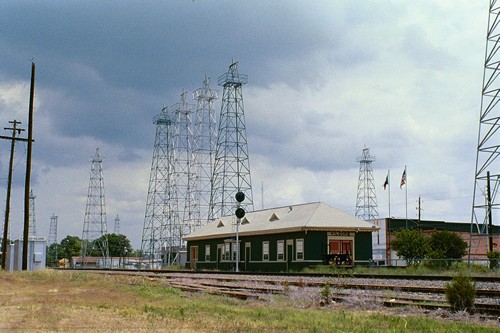
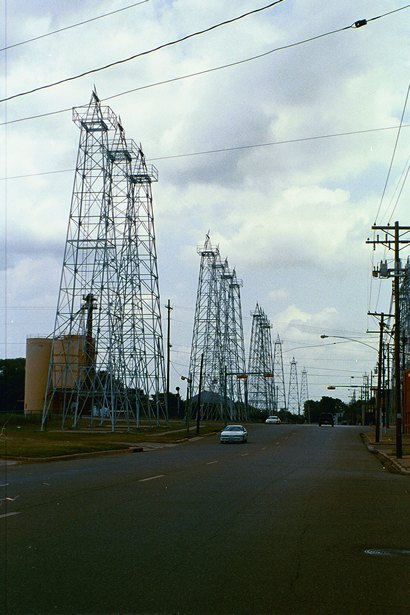
Kilgore former
depot with oil derricks today
TE photo
5-02
More Texas Depots |
Another view
of the "the world's richest acre"
TE photo 5-02 |
|
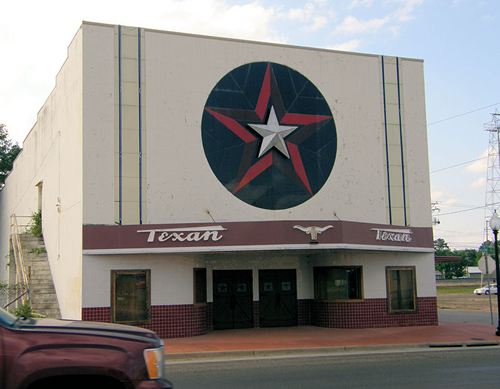
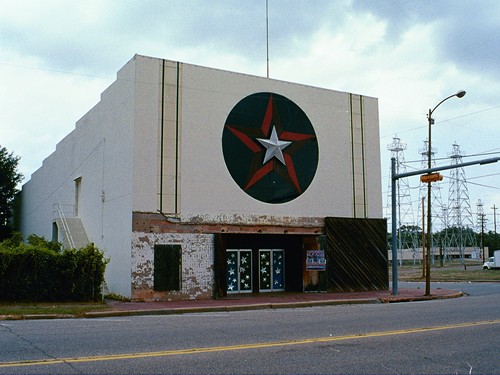
Texan
Theatre in 2002
"All interior was done in western style decor." - Jean
Broussard.
TE photo
5-02
|
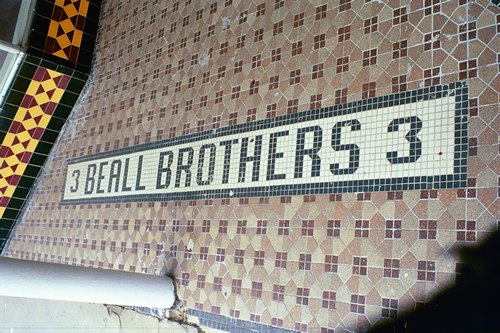
Beall Brothers
tile sidewalk sign. The first Beall Store?
TE photo 5-02 |
|
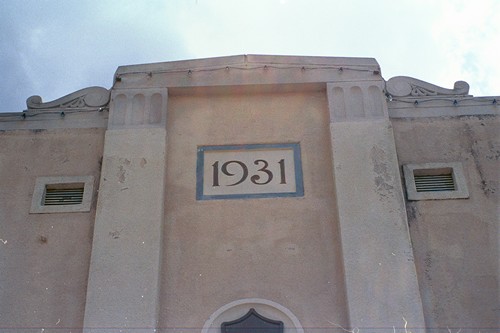
1931 date plate.
Relic of boomtimes.
TE photo
5-02
More Pitted Dates
|
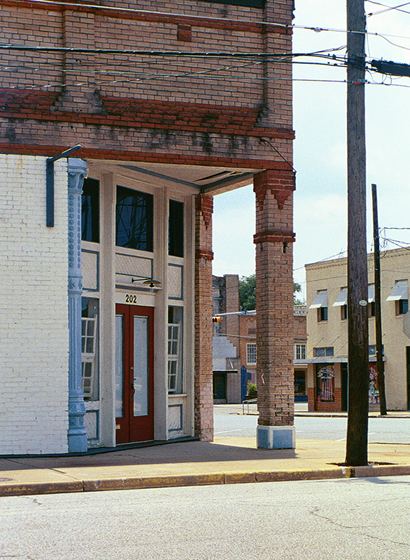
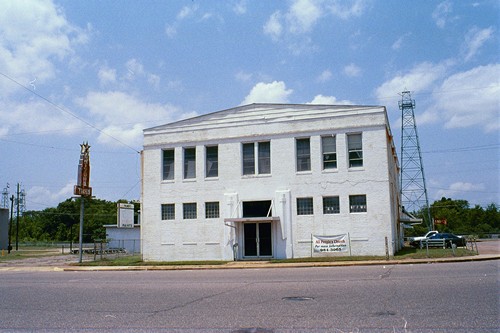
Corner Building
TE photo 5-02 |
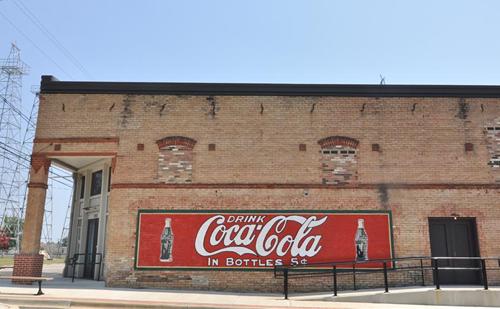
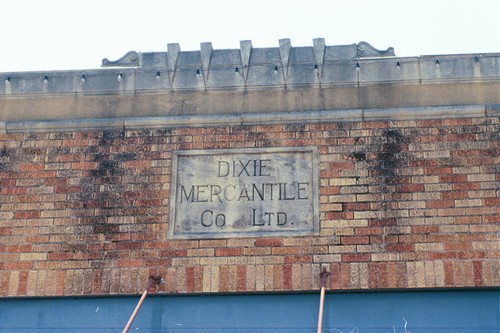
Dixie Mercantile
Co.
TE photo 5-02 |
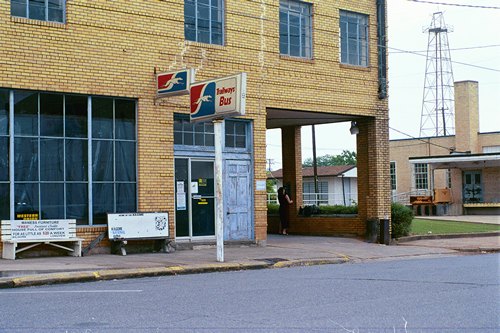
Kilgore Trailway
Bus Station
TE photo 5-02 |
|
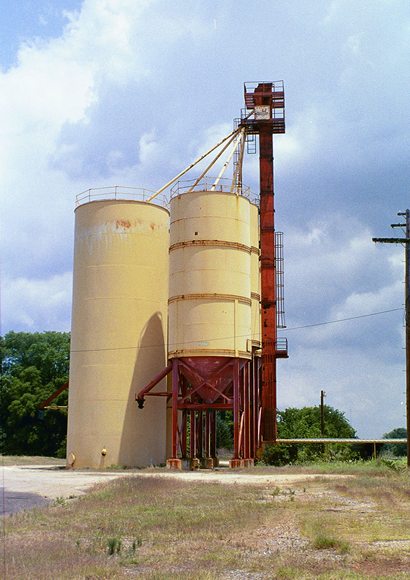
Water Tanks
TE
photo 5-02
|
Kilgore Chronicles
Gussie
Nell Davis by Archie P. McDonald
Gussie Nell Davis and the Kilgore Rangerettes
FDR
and Nine Acres by Bob Bowman
"With luck -- and an infusion of funds -- a historic Kilgore
home built in the 1930s could be on its way to regaining its stature
as one of East Texas’ most interesting homes. Set in sylvan splendor
in the middle of the East Texas Oil Field, the home of oilman Tom
Potter is best known as Nine Acres, a place where President Franklin
D. Roosevelt probably visited in the thirties."
Playmates
by George Lester. A memoir
Kilgore
Hotels › Book Here
|
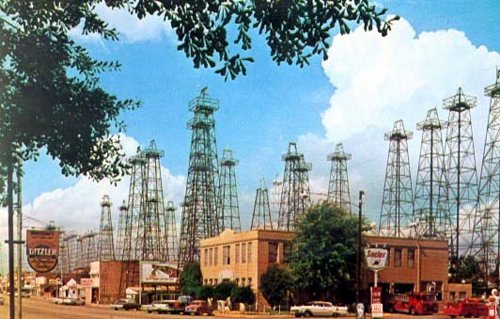
Kilgore Downtown
in the 1960s
Postcard
courtesy www.rootsweb.com/ %7Etxpstcrd/ |
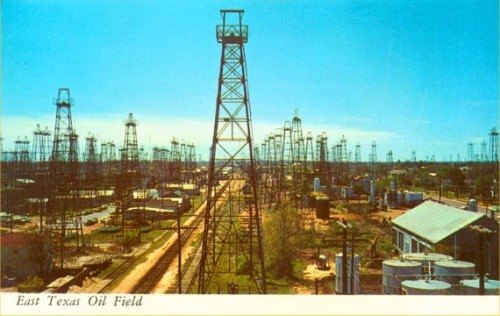
" East
Texas Oil Field"
Postcard
courtesy www.rootsweb.com/ %7Etxpstcrd/ |
Derricks by
the railroad tracks
Photo courtesy Gerald
Massey, June 2012 |
|
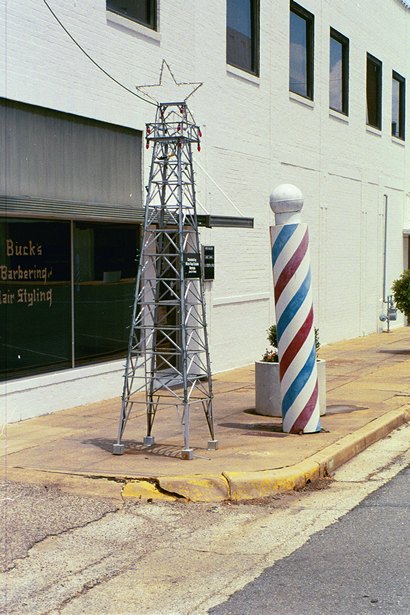
Barber pole
and miniature oil derrick
TE photo 5-02
|
| Texas
Escapes, in its purpose to preserve historic, endangered and vanishing
Texas, asks that anyone wishing to share their local history, stories,
landmarks and recent or vintage photos, please contact
us. |
|
|
 HOME
HOME

 Texas
Gulf Coast
Texas
Gulf Coast East
Texas
East
Texas Central
Texas North
Central
Texas North Central
Texas South
Central
Texas South Texas
Panhandle
Texas
Panhandle South
Texas
South
Texas Texas
Hill Country
Texas
Hill Country West
Texas
West
Texas Texas
Ghost Towns
Texas
Ghost Towns Texas
Counties
Texas
Counties