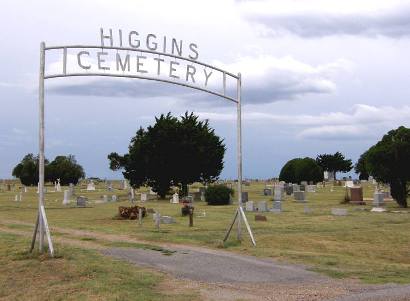
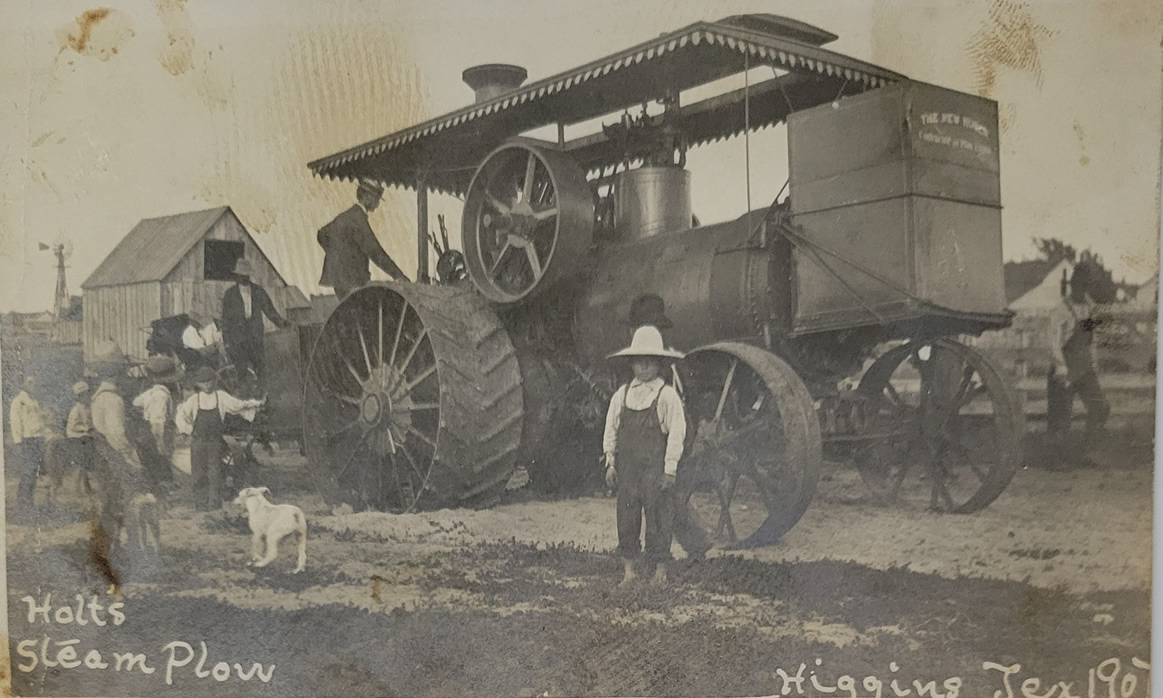
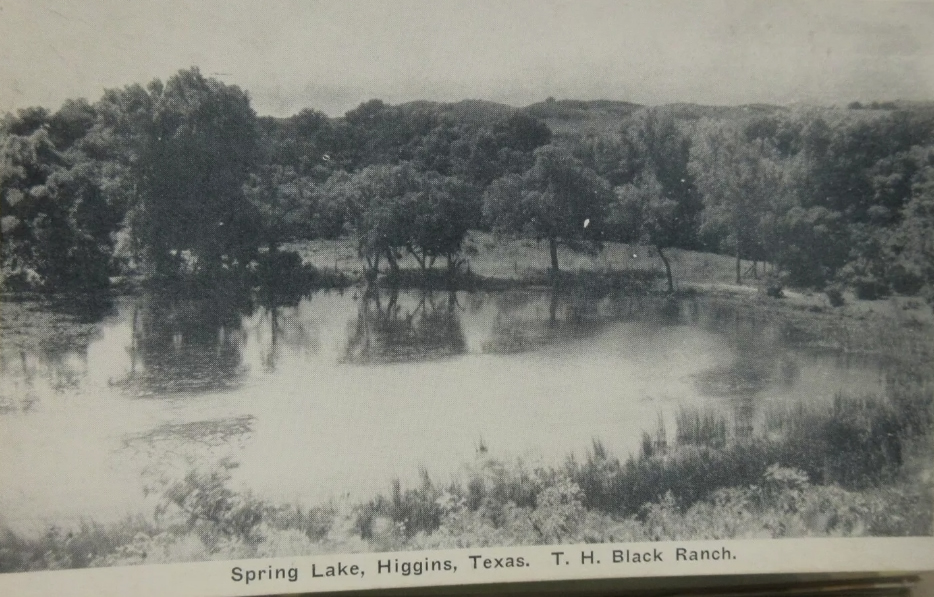
|
HIGGINS, TEXAS
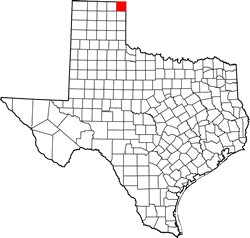
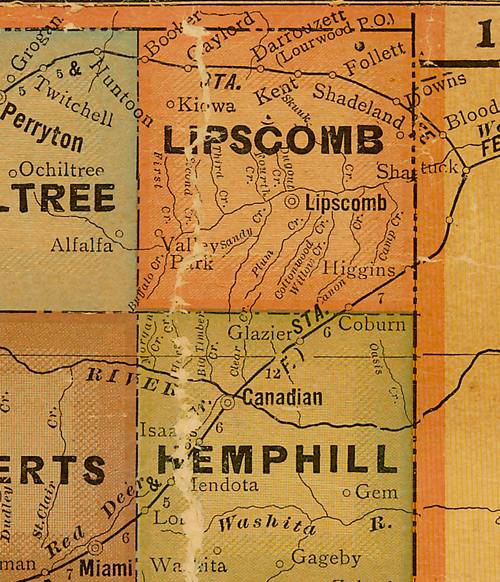
Lipscomb
County, Texas Panhandle
36°7'12"N 100°1'32"W (36.120027, -100.025597)
Highway 60, FM 1453 and FM 213
2 Miles from the Oklahoma State Line
20 Miles SE of Lipscomb
66 Miles NE of Pampa
ZIP code 79046
Area code 806
Population: 391 Est. (2019)
397 (2010) 425 (2000) 464 (1990)
Higgins, Texas Area Hotels › Perryton
Hotels | Pampa
Hotels |
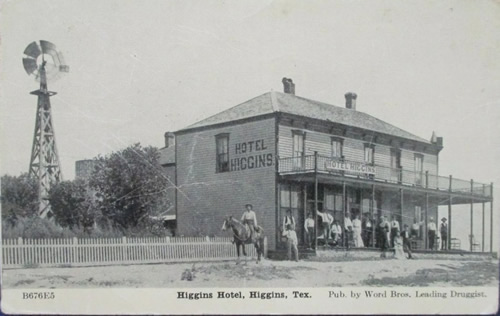 |
History in
a Pecan Shell
The
area has a history of Franciscan monk Juan de Padilla operating a
mission for the Indians here in the mid 1500s, although a site has
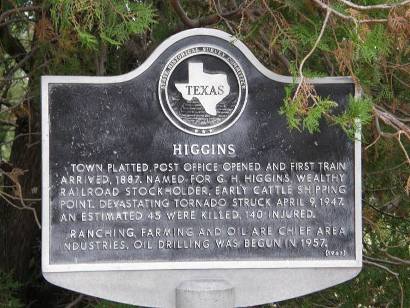
not been found. More recent history begins in 1886, when the Santa
Fe Railroad started surveying the site for an extension of the line
coming out of Wichita, Kansas.
B. H. Eldridge and E. B. Purcell are credited with platting the town
which they named after Santa Fe stockholder G. H. Higgins of Massachusetts.
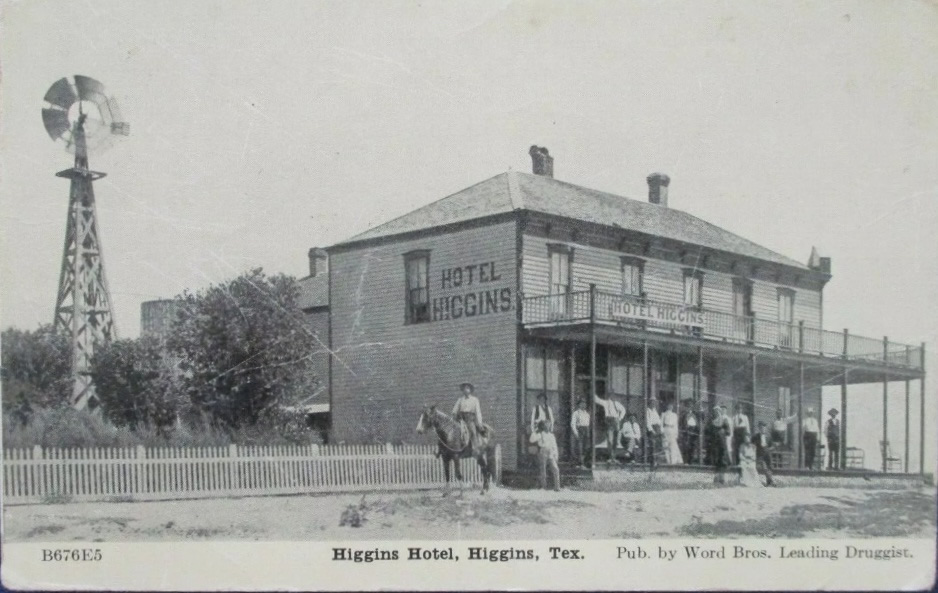
A post office and school opened in 1888 and most essential businesses
soon followed, making Higgins a cattle shipping point.
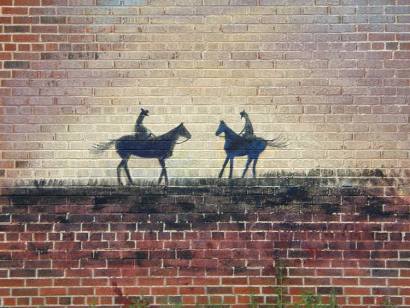
Prior to becoming famous, Oklahoman Will Rogers worked on the Ewing
family's Little Robe Ranch in the 1890s. Without a doubt, the young
cowboy practiced and perfected his fancy rope tricks here before he
joined the famous Ziegfeld Follies.
The town had its first newspaper published in 1888 which sold out
in 1897 to the "now defunct" Higgins News.
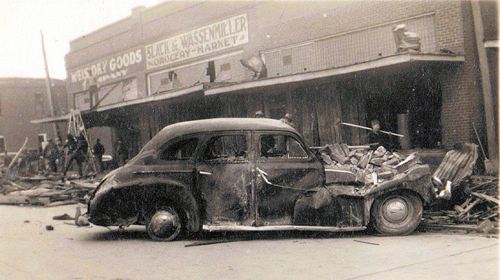
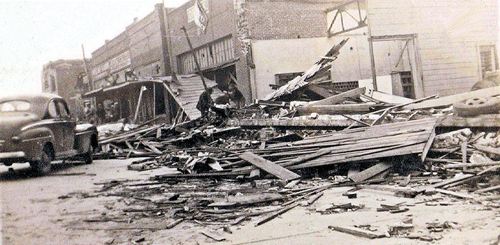
On April 9, 1947, the event that was to become forever linked to Higgins
occurred. A tornado
or tornadoes approached Higgins from the south, after first hitting
Glazier, Texas.
Forty-five people lost their lives as the storm continued up into
Oklahoma and even into Kansas.
Early records aren't available, but the town had a population of just
over 700 in the mid 1980s. By 1990 it was down to 464 and has declined
further to 425.
Will Rogers Day, introduced in 1962 continues to be an annual
event. |
 |
Higgins, Texas
Landmarks & Images
|
|
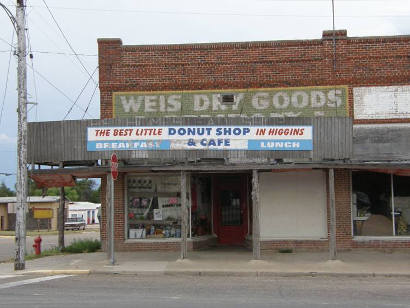
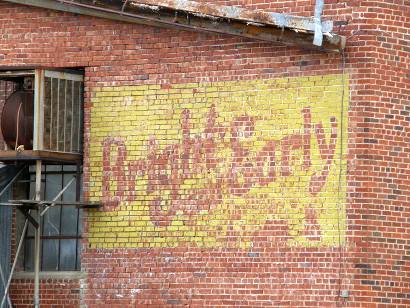
Weis Dry Goods
Building today
Photo
courtesy Barclay
Gibson, July 2009
|
|
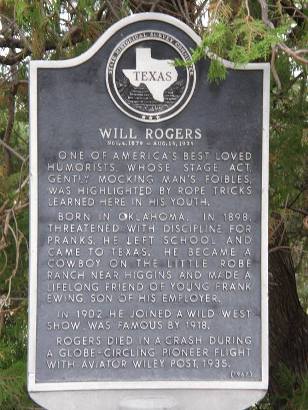
Will Rogers
Historical Marker
on US 60
Photo courtesy Barclay
Gibson, July 2009
|
Historical
Marker:
Will Rogers
One of America's
best loved humorists, whose stage act, gently mocking man's foibles,
was highlighted by rope tricks learned here in his youth. Born in
Oklahoma. In 1898, threatened with discipline for pranks, he left
school and came to Texas. He became a cowboy on the Little Robe Ranch
near Higgins and made a lifelong friend of young Frank Ewing, son
of his employer. In 1902 he joined a wild west show; was famous by
1918. Rogers died in a crash during a globe-circling pioneer flight
with aviator Wiley Post, 1935.
(1967) |
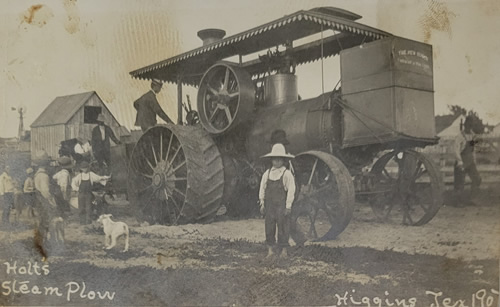
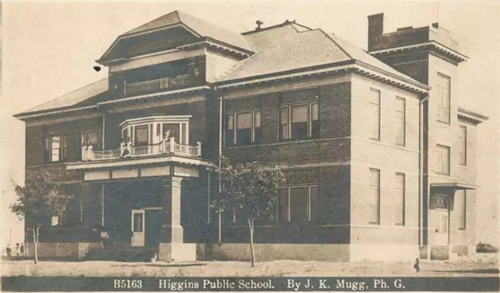
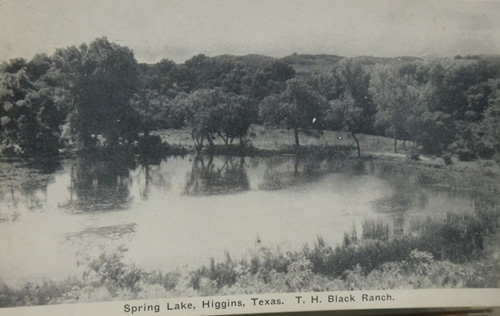
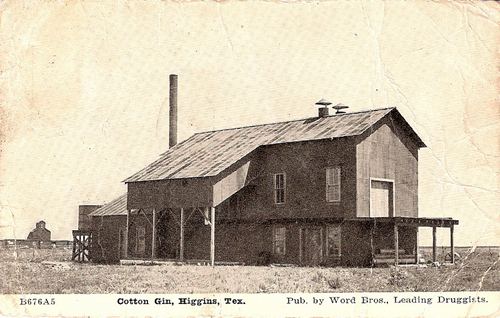
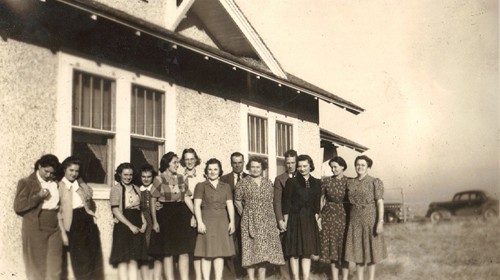
Higgins, Texas
Old Photos
|
 |
 |
 |
 |
 |
 |
Higgins, Texas
Forum
Glazier and
Higgins Tornado
of April, 1947
Dear TE, The recent pictures of the Greenburg, Kansas tornado brought
back memories of the tornado that hit Hemphill
County back in 1947. I was 12 years old on April 9, 1947 when
I witnessed the tornado that hit Higgins and Glazier.
It was just southwest of the airport at Canadian,
Texas, where my father Thomas L. McCurdy was the airport manager.
The tornado was so large that there were five or six smaller twisters
circling the main column. The tornado was so close that the air
seemed to be all sucked up. It was such weird feeling. The main
tornado lifted as it crossed the South Canadian River but went back
on the ground after reaching the north side. We were so frightened
by it, that we talked about it for hours after it had passed. The
next morning someone was banging on the door at the airport. The
man who ran the paper at Canadian
was saying that Glazier
was wiped out. My dad flew the photographer over the area and took
the original pictures of the devastation. After returning to the
airport, my dad flew back to Glazier and landed on the highway to
pick up two of the injured and bring them back to the Canadian hospital.
He remained in that plane for the next two days flying people from
Higgins and Glazier
because the highway from Canadian
to Higgins was impassable. All the barbed wire and telephone/ telegraph
lines were twisted together and wove back and forth on the highway
for many miles. Cars couldn't drive over it because of the barbed
wire, so Dad's airplane was the main lifeline between Canadian
and the other two towns. On the second day the Army flew in with
stretcher planes and helped. Dad’s plane was a Stinson Voyager with
a stretcher in it. He could carry one in the stretcher and one in
the back seat. I don’t know how many trips he made but I know he
was in the airplane for two solid days. The local gasoline dealer
brought kerosene smuge pots to the airport and lined both sides
of the runaway. They did the same in Glazier
and Higgins and he flew all night long to bring the injured to Canadian.
The basements of the Baptist and Methodist churches were filled
with injured people after the hospital had run out of room. The
high school gym was also used. Even though I was only twelve at
the time, my memories of that event remain vivid. - Otto W. (Bill)
McCurdy, Houston Texas, May 14, 2007
|
 |
| Texas
Escapes, in its purpose to preserve historic, endangered and vanishing
Texas, asks that anyone wishing to share their local history, stories,
landmarks and recent or vintage photos, please contact
us. |
|
|
 HOME
HOME