|
|
 |
History in
a Pecan Shell
The town was named
for Texas legislator, judge and (at that time a newly appointed) railroad
commissioner, William Pinckney McLean (1836-1925). McLean grew up
around a water well drilled by the Choctaw, Oklahoma and Texas Railroad
Company in 1901.
English rancher Alfred Rowe laid out a townsite and mail service began
with the opening of the McLean post office in 1902.
Two years later McLean was thriving with stores, wagonyards, a lumberyard,
livery stables and its own newspaper, modestly named the McLean News.
A well in Main Street was the towns first infrastructure - outfitted
with a windmill the water was hauled to households by the barrel.
McLean made efforts (in 1908 and 1919) to replace Lefors
as the Gray County Seat. The rivalry was settled when the oil boom
made Pampa the county's dominant city.
By 1940 the population was around 1,500 and in 1943 a German
P.O.W. Camp was built, providing some jobs for the town -
but having the unforeseen negative effect at having local women marry
American guards and move away.
By 1948 the Camp was reduced to only foundations and today an airfield
cuts across the former camp center.
Amarillo has drained
off McLeans population over the years - reducing the number of McLean
citizens to only 1,183 in 1970.
Book Hotel Here > Amarillo
Hotels |
 |
McLean, Texas
Attractions/Landmarks
|
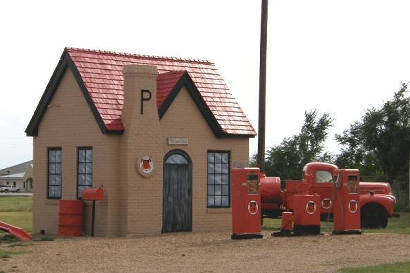
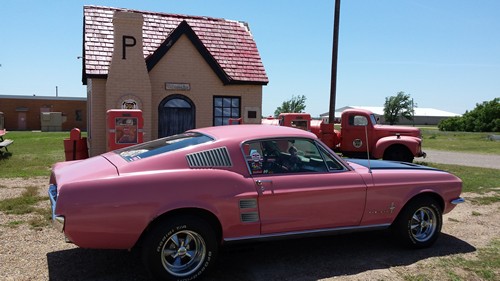
The 1929 Route
66 Phillips 66 Station
Jimmy Dobson Photo, May 2016 |
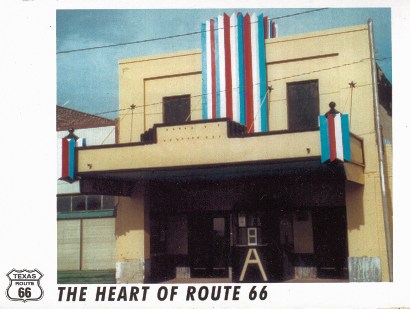
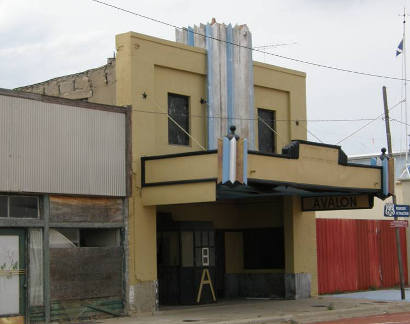
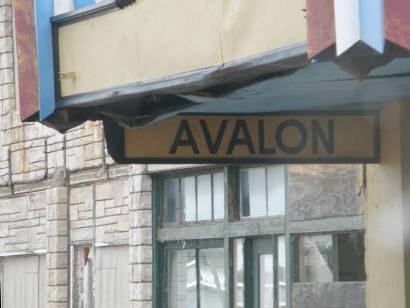
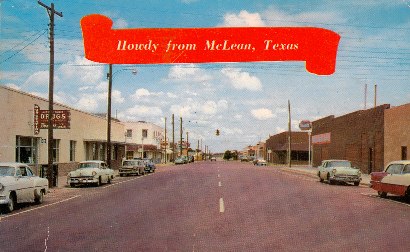
The Avalon Theater
Then
Old Postcard courtesy Delbert Trew |
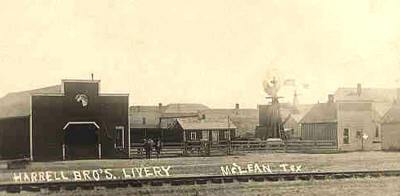
"Harrell
Bro's Livery, McLean, Texas"
Photo courtesy texasoldphotos.com |
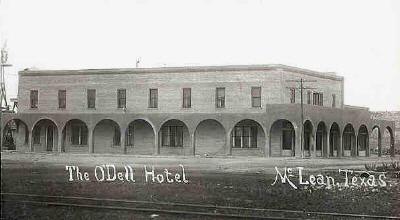
The O'Dell Hotel,
McLean, Texas
Photo courtesy texasoldphotos.com |
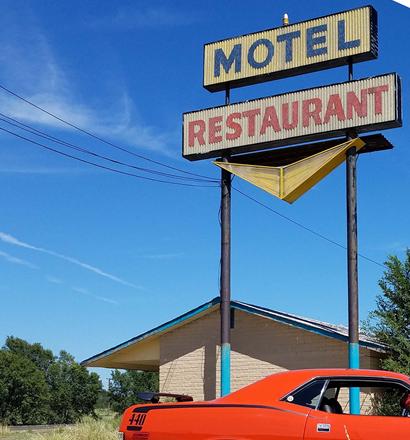
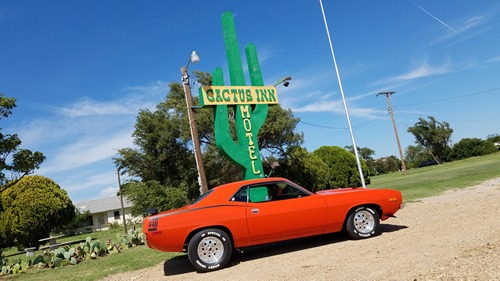
Route
66 abandoned motel
Photo courtesy Jimmy Dobson, August 2017 |
 |
McLean
is fortunate to have a very active group of preservation-minded citizens
that have restored two historic gasoline service stations (The First
Phillips
66 station outside of Oklahoma and a 1932 Texaco station) as well
as the Avalon Theater downtown.
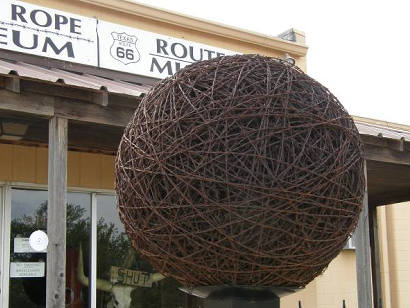
A former garment factory now provides space for twin museums. One,
Devil's
Rope Museum is a tribute to barbed wire and it's indisputable
importance and the other is devoted to Texas'
portion of the fabled highway - Route 66.
The Prisoner of War
Camp was acknowledged by the dedication of a historical marker
in 1997.
Delbert Trew, Panhandle rancher, historian, and columnist, has written
a most informative book on the McLean P.O.W. Camp comprised of interviews,
photos, and most importantly, the memories of those who had some connection
to the camp back in the 40s. The book is now in it's fourth printing.
Trew is also the author of the R.O. Ranch - a history of ranch and
the Englishman owner R. O. Rowe - the man who platted the town of
McLean and died under unusual circumstances |
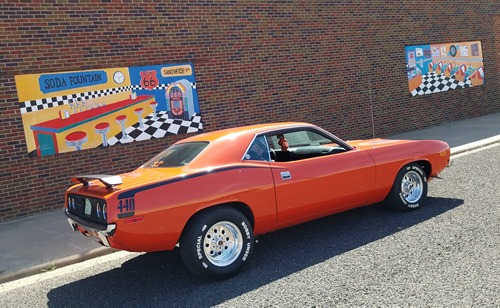 |
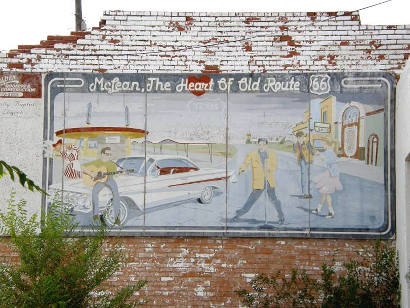
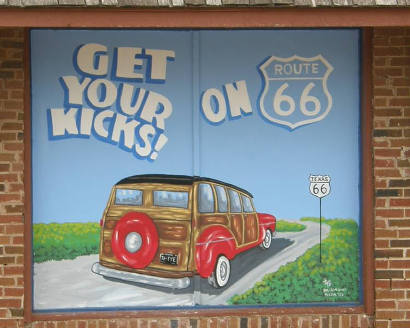
Route
66 Wall Murals
Photo courtesy Jimmy Dobson, August 2017 |
McLean Chronicles
McLean
P.O.W. Camp by Delbert Trew
Pederson
Creek offered unique privileges by Delbert Trew
"Early residents along Pederson Creek just west of McLean enjoyed
two privileges most other settlers did not have..."
A
look at wash day from early to modern by Delbert Trew
"...David Bowerman of Amarillo asked whether I knew some of
his relatives who operated a laundry or "wash-a-teria" in early
McLean. When the question was presented to our coffee shop locals,
we heard some interesting facts and stories about this most important
local institution..."
|
A souvenir postcard
circa 1955
TE postcard archives |
McLean, Texas
Forum
Subject:
Gracey School near McLean Texas
My name is Jim Gracey and my grandfather was James Rush Gracey (b
1858 d. 1938) who worked on a ranch in the Texas Panhandle. I remember
as a small boy (circa 1940) going to visit a brick school house
near McLean Texas that was named "Gracey School". There were even
school busses with the name Gracey on it. I have been searching
my parents old photographs to find a picture but have been unsuccessful.
The story I remember was that J. R. Gracey had something to do with
founding the school and that was why it was named after him. I have
no idea if the building still exists. I would appreciate any information
you may have or any suggestions for further research. - Jim Gracey,
July 06, 2005
|
| Texas
Escapes, in its purpose to preserve historic, endangered and vanishing
Texas, asks that anyone wishing to share their local history, stories,
landmarks and recent or vintage photos, please contact
us. |
|
|
 HOME
HOME

 Texas
Gulf Coast
Texas
Gulf Coast East
Texas
East
Texas Central
Texas North
Central
Texas North Central
Texas South
Central
Texas South Texas
Panhandle
Texas
Panhandle South
Texas
South
Texas Texas
Hill Country
Texas
Hill Country West
Texas
West
Texas Texas
Ghost Towns
Texas
Ghost Towns Texas
Counties
Texas
Counties