|
 |
History in
a Pecan Shell
The town's name
is a rare of example of "what you see is what you get." The community
developed around springs (still flowing today) that surfaced in the
shade of Walnut trees. The town's history is directly related to that
of the Texas Central Railroad.
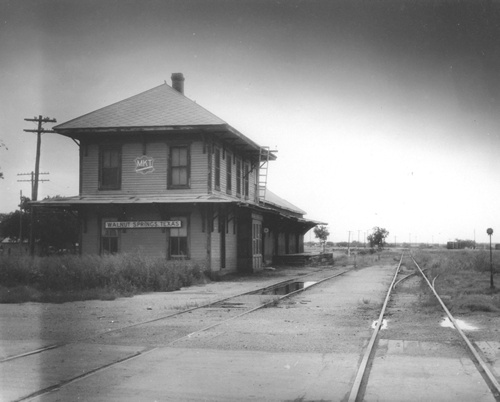
The railroad arrived in 1880-81, building machine shops which burned
in the 1920s and weren't rebuilt. The railroad later joined the long
roster of defunct Texas
railroads, but its impact on the town is still being felt (see
letter below).
A post office was granted in 1883, however the name Walnut Springs
wasn't applied until 1892. In 1885 Central College was opened, becoming
part of the public school system seven years later.
From a high-water mark of 1,449 before the railroad fire, it declined
to 723 as the Great Depression wound down. In 1961 the population
was just under 500 and growth has been slow but steady - reaching
the current number of 815 residents.
[Forum: Walnut Springs Today
by Walnut Springs City Engineer] |
 |
Walnut Springs,
Texas
Landmarks / Attractions
Photo Gallery |
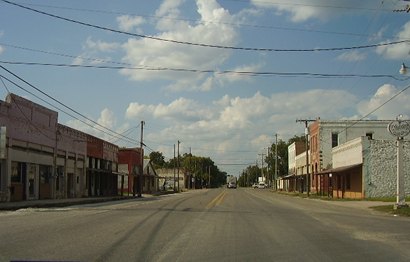
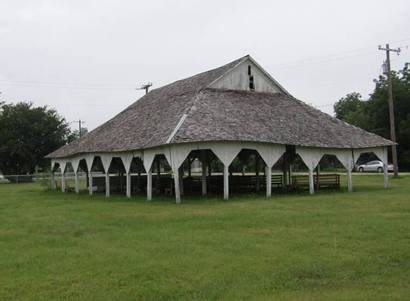
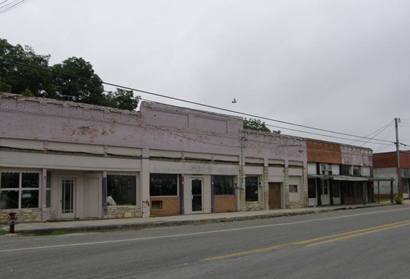
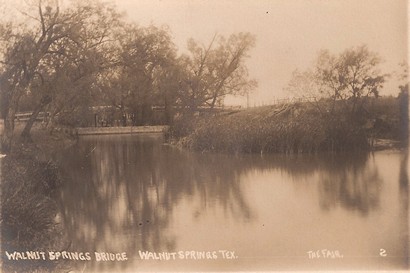
"This is
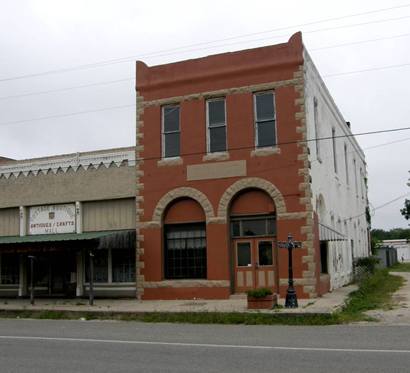
the Old Town Of Walnut Springs, TX. Not much left... In it's day it
was a busy town with the trains. The Katy Park is still there."
Paula Mc Michael Athey, 2008 |
|
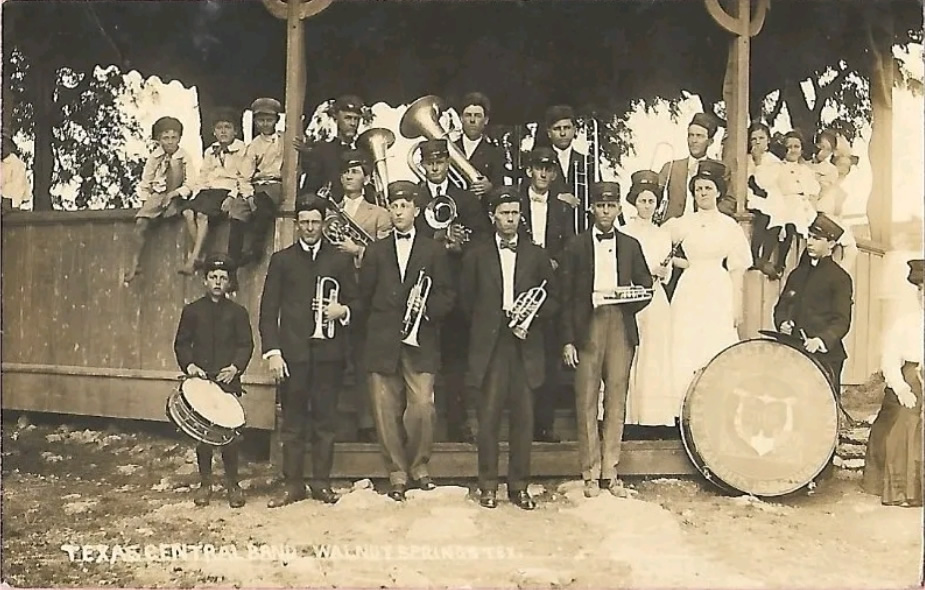
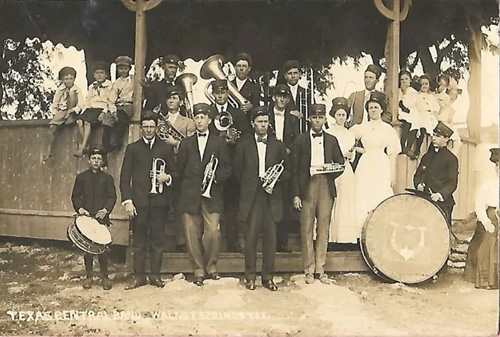
Vintage
photo courtesy Dane Williams Collection
|
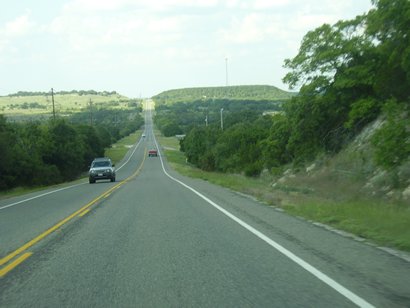
"Hwy 144
between Walnut Springs and Glen
Rose. The big hill on the right down the hwy. is where I lived
in a country house. Another house is there now. The old house is gone
now."
Paula Mc Michael Athey, September 28, 2008 |
Walnut Springs,
Texas Forum
Walnut
Springs Today
Letter from the Walnut Springs City Engineer -
I have been the city engineer for the City of Walnut Springs, Texas,
for about 10 years. While trying to use a magnetic locator to find
a cast iron pipeline, I was getting readings all over the place.
An old timer came by and told that my location was very near the
boiler shop of the [now defunct] Texas Central Railroad. [In the
20s when the fire occured] there were explosions in the boiler shop
that covered the area with debris. The Texas Central Railroad was
created in the 1880's and I believe the last of it was shut down
in 1936. The street and utilities were given to the City of Walnut
Springs. In the downtown area, there is still the foundation for
a steam engine to drive the water works.
Due to the decline in the railroad, and the ranching businesses,
the town fell into disrepair for years. In the late 1980's a sewer
system funded by the FHA was installed along with a treatment plant.
In the late 1990's, we replaced a jerry-rigged water pressure system
with a new 40,000 gallon standpipe along with a 1,000 gpm pumping
station and a revised power system for the plant. In the year 2000,
we installed a new well with a 230 gpm capacity, a 44,000 gallon
ground storage tank, and another 1,000 gpm pump station new the
Hornet Stadium just south of city hall. This vastly improved the
water reliability since during the storm of 1998, the only water
pipe crossing Steele creek washed out. The concrete in-ground tank
is still there and the last time I checked, it was still in great
shape.
In 2002, we replaced the old 1922 vintage concrete tank improved
the plant piping. I had the old 1922 vintage concrete ground storage
tank removed and replaced with a new welded steel tank constructed
by Bulldog Steel of Clyde, Texas. There were several wall cracks,
but the slab was as sound as new. The new tank sits on the 1922
slab. A new grade beam was poured around the tank. The reinforcing
steel was square stock and twisted to deform it to obtain a good
grip to the concrete. It has the historic Lone Star Steel trade
mark on it as I recall. It was all poured by hand, the workers placing
and mixing it in shifts, working around the clock.
With this project, the City is now current with all TCEQ regulations.
The City and Walnut Springs ISD have begun to grow and have already
attracted several retail businesses.
The City Secretary, Kay Offutt (her husband is Welsh, and manager
of the Flat Top Ranch), sent me an extremely interesting book about
the history of the Texas Central Railroad and Walnut Springs as
a Christmas present . While doing the land acquisition to expand
the football field from the required 80 yards for 6 man ball to
the full 100 yards, I determined the football field to be located
very near the historical site of the boiler shop. There was a round
house there and it is my understanding, it is located about two
hundred yards behind the new post office fronting Texas 144.
A gentleman named Murphy Bruns, retired at Tow, Texas, further told
me how the town was bustling when he was foreman for the construction
of the REA-funded rural power lines in the area in the 1930's. His
company was owned by a Mr. Taylor, who was Lady Bird Johnson's father.
The railroad sold out to the Missouri Kansas and Texas "Katy" railroad
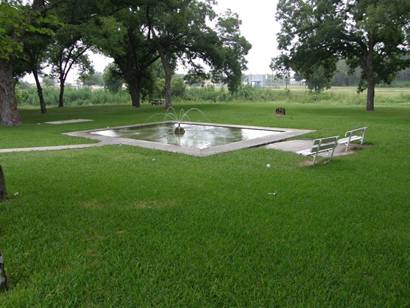
at some point. The Katy park still exists as a city park today and
houses and protects the Walnut Springs. These springs still flow
several hundred gallons a minute and have never gone dry. In the
northeast part of town, you can still see the influence of the railroad
houses. Most have been changed and some replaced, but if you stand
at the end of street you can see that the gable roofs line up exactly.
The city is currently being repopulated by the 1980's generation
that work mostly in other cities. - City Engineer, Walnut Springs,
Texas, December 13, 2005
Walnut Springs:
Union Veteran & the Confederate Widow
I find your [magazine] unique and very interesting. I was especially
interested in Walnut Springs since my Great Grandfather Franklin
Estein is buried in the cemetery. He was a German immigrant who
fought in the civil war as a Union soldier having joined in New
Orleans where he landed from Germany. He was a stone mason and many
of the stone structures in Walnut Springs were built by him. He
married a widow of a Confederate soldier and for most of his life
he never told her he had been in the Union army, only when he applied
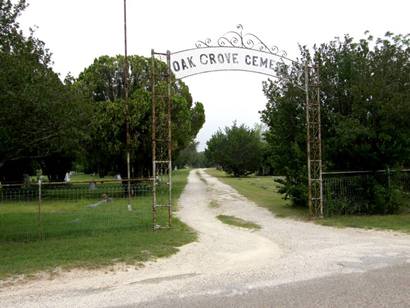
for his pension did she find out. I intend to visit Walnut Springs
next year and do more research. - Dean Thompson, President, 9/11
Flight Crew Memorial, November 30, 2006
|
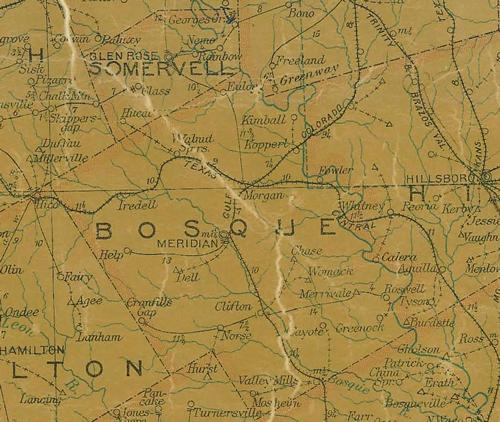 |
1907 Bosque
County postal map showing Walnut Springs on the Central Texas
Railroad
From Texas state map #2090
Courtesy
Texas General Land Office |
| Texas
Escapes, in its purpose to preserve historic, endangered and vanishing
Texas, asks that anyone wishing to share their local history, stories,
landmarks and recent or vintage photos, please contact
us. |
|
|
 HOME
HOME