|
 |
History in
a Pecan Shell
Jonathan Lane,
president of the Cane Belt Railroad is the town’s namesake. In 1900
the railroad ran from its Wharton County terminus (Lane City) to Eagle
Lake (Colorado
County). Lane had purchased some 25,000 acres of land from fabled
rancher Shanghai
Pierce. This land was resold a few years later to a land company
that recruited settlers from northern states to come to Texas
and become rice farmers. Financing was available at generous terms
and a substantial pumping system using water from the Colorado River
was built by the Bay Prairie Irrigation Company.
Jonathan Lane’s brother T. W. Lane, managed the system after it had
become the Southern Irrigation Company by 1904. The plant was said
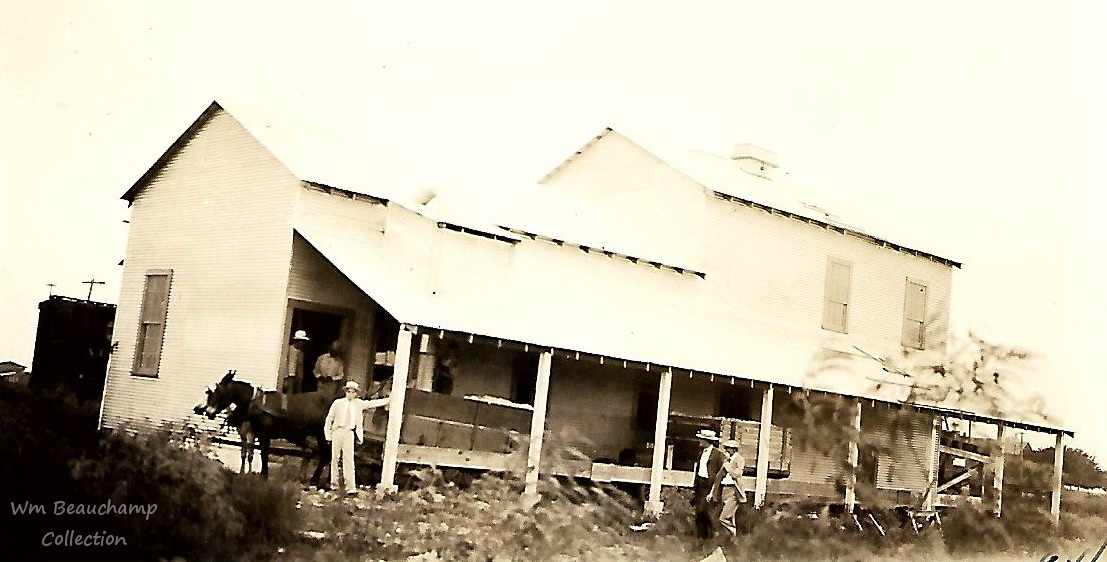
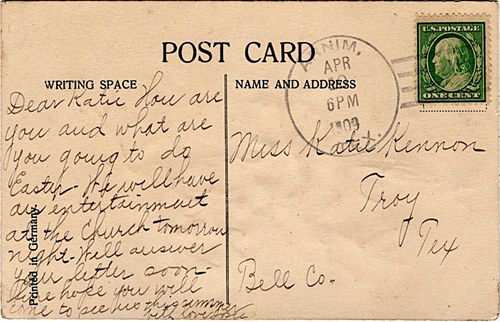
to be the largest of it kind in the world. A post office opened in
1901 under the name of Arnim (see postmark
below) in the Arnim-Lane store. This partnership also operated
a store in Flatonia, Texas
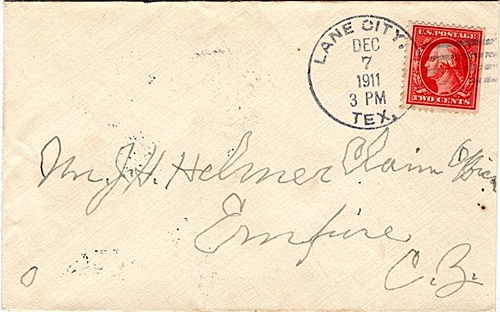
which is still standing in 2008. In February of 1911 the town was
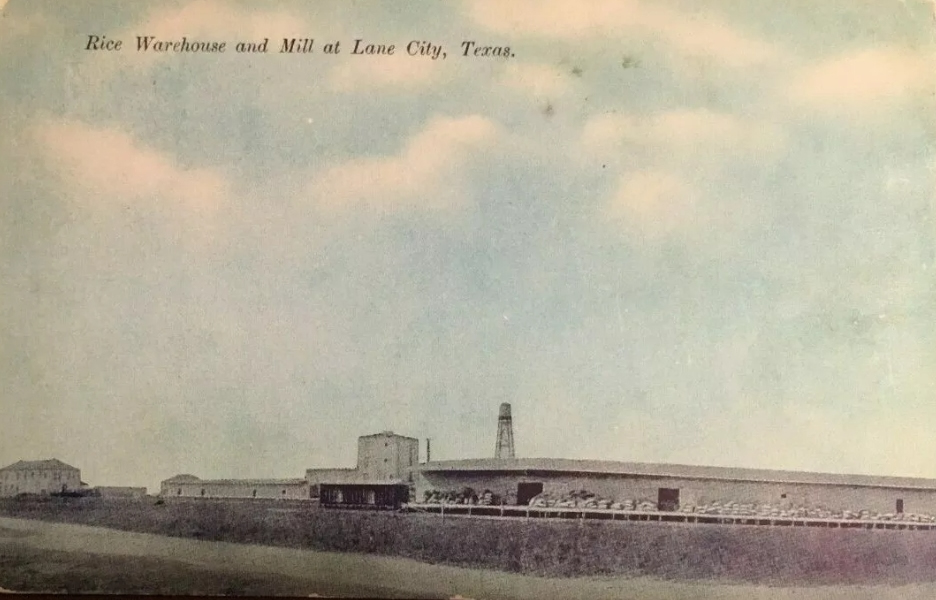
renamed Lane City. Lane City peaked in 1909 when the economy
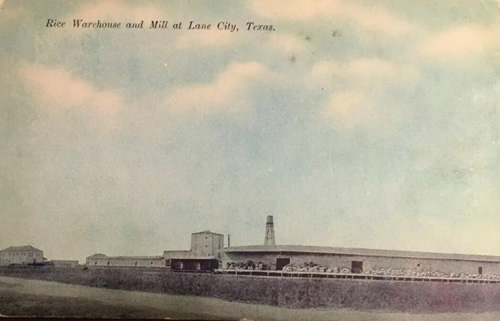
was almost entirely based on rice farming. The town had all essential
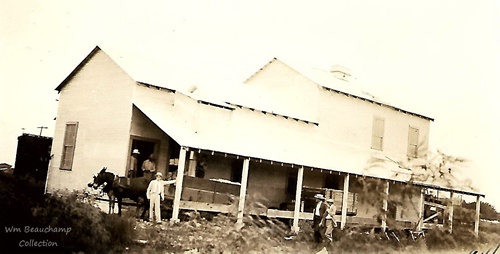
businesses and displayed its wealth through its “skyline” which included
a rare two-story railroad depot, a two-story pharmacy, a two-story
hotel as well as a three-story rice mill / office and warehouse.
In July of 1909, the town was hit by a severe hurricane which swept
through the area, demolishing each of the multi-story buildings and
ruining the rice crop. The irrigation system was damaged and the town
never recovered from the storm.
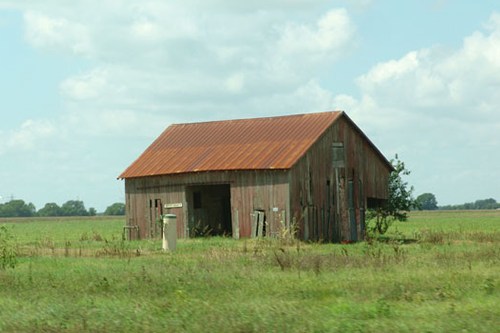
Rice cultivation has since been replaced by crops of corn,
cotton and cattle feed although
the old irrigation lines are still in use. The post office / store
/ gas station were still operating in 1990 although the 1903 Methodist
church was demolished in 1984.
The Lane City school merged with the Wharton
ISD in 1957. A Black Baptist church was reportedly still active in
1990. From a 1920 population of just 150 residents, Lane City peaked
in 1960 with 200 residents which declined to just 111 in 1980 – the
figure that’s still used on the 2017 state map. |
 |
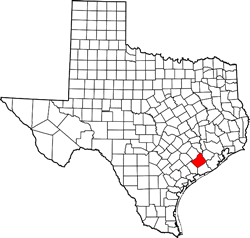
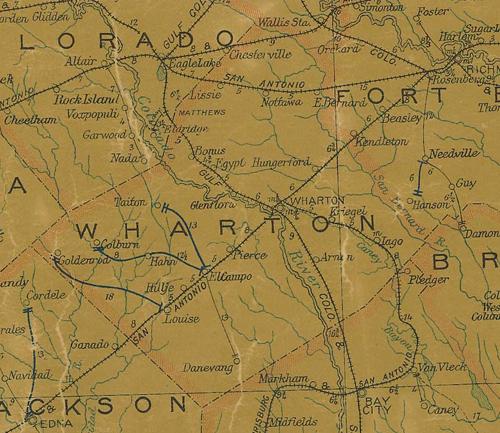
Wharton
County 1907 postal map showing Arnim
From Texas state map #2090
Courtesy
Texas General Land Office |
| Texas
Escapes, in its purpose to preserve historic, endangered and vanishing
Texas, asks that anyone wishing to share their local history, stories,
landmarks and recent or vintage photos, please contact
us. |
|
|
 HOME
HOME